
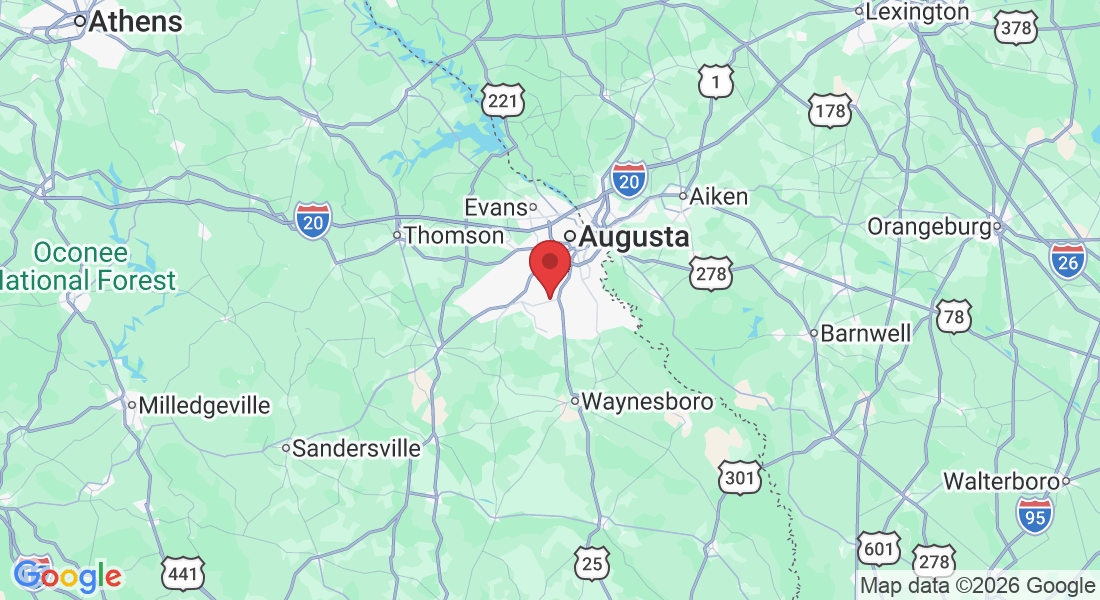

In the fantastic area of Richmond County you’ll be in good company with around 206,961 residents with around 51% of those homeowners. With an average age of 36, the residents of Richmond County are well established, made up of families of all age groups. Though fairly kicked back throughout the week, during weekends and holidays, you can see a lot more activity and excitement. Over the recent months roughly 684 homes have been sold with an average sold price of $240,343. That is an increase of $11,342 from the previous period.
Want the full market report for Richmond County?
We want to ensure that you have all the information needed to make the best decisions when it comes to your home goals. When you enter your info below you will get instant access to the area's latest market report, complete with sales and demographic trends.

Local News & Advice
Read helpful resources and articles related to the area.

How Much Is Your Current Augusta Home Worth?
You are thinking about a bigger home.
More bedrooms.
More storage.
A larger yard.
Maybe a home office.
Maybe you want a different location or a floor plan that works better for your family.
Before you start looking at what comes next, there is one important question to answer:
“How much is my current Augusta home worth?”
For a Move-Up Seller, that number matters.
Your current home's possible selling price can affect your equity, your down payment, your next-home budget, and whether you feel ready to move.
But figuring out what your home may be worth takes more than typing your address into an online calculator.
Here is what Augusta-area homeowners should know.
1. Why Your Current Home's Value Matters When Moving Up
If you were buying your first home, you would mainly focus on your savings, income, financing, and budget.
A Move-Up Seller has another important piece.
The home you already own.
Your current home may hold equity that could help with your next purchase.
Knowing what the home may sell for can help you estimate:
Your possible equity
Your possible sale proceeds
Money that may be available for a down payment
Your next-home price range
How much cash you may want to keep
Whether moving now fits your plans
This is why I like to start the move-up conversation with the current home.
Before we focus on the house you want, let's understand the house you have.
2. Your Home Is Worth What Buyers Are Willing to Pay
Homeowners can become attached to a certain number.
Maybe a neighbor sold for a high price.
Maybe you made expensive updates.
Maybe an online estimate gave you a number you liked.
Those things can provide information.
But they do not set the final sale price.
Your home's market value depends on how buyers respond to the property and how it compares with other homes they could buy.
A good pricing plan looks at the whole picture.
3. Location Can Affect Your Home's Value
Location is one of the first things buyers consider.
Even within the Augusta area, two similar homes may have different values based on where they are located.
Buyers may consider things such as:
Neighborhood
Nearby homes
Lot location
Road access
Drive times
Shopping
Parks and recreation
Medical facilities
School assignments
Access to Fort Gordon
Other nearby services
A home in Evans may need to be compared with different properties than a home in Martinez, Grovetown, Harlem, or Augusta.
That is why local knowledge matters when estimating value.
4. Size and Floor Plan Matter
Square footage is important.
But buyers are also looking at how that space works.
Two homes may be similar in size but feel very different.
Buyers may look at:
Number of bedrooms
Number of bathrooms
Kitchen size
Storage
Closet space
Garage
Bonus rooms
Home office space
Main-level living areas
Overall floor plan
A useful floor plan can make a home more appealing to the buyers looking in that price range.
This is one reason a home should not be valued by square footage alone.
5. Your Home's Condition Matters
Imagine two similar houses in the same area.
One is clean, well cared for, and ready for a buyer to move in.
The other needs several repairs.
Buyers may look at those homes differently.
Condition can include:
Roof
Heating and cooling systems
Plumbing
Electrical systems
Flooring
Paint
Windows
Appliances
Exterior condition
Yard
General maintenance
This does not mean you need to remodel your entire home before selling.
It means the condition should be considered when estimating what buyers may pay.
6. Updates Can Help, but Cost Does Not Equal Value
Maybe you spent money updating your kitchen.
Maybe you added new flooring.
Maybe you replaced windows or updated a bathroom.
Those improvements may matter to buyers.
But spending $20,000 on a project does not automatically add $20,000 to your sale price.
Some updates may be more appealing to buyers than others.
Before making a large improvement just to sell, ask whether it makes sense for your home and your market.
Sometimes smaller changes can make a meaningful difference in how a home shows.
Those may include:
Fresh paint
Small repairs
Deep cleaning
Decluttering
Improved lighting
Yard cleanup
Better curb appeal
Talk with your Realtor before spending a large amount of money on pre-sale projects.
7. Recent Comparable Sales Are Important
You may hear Realtors use the word “comps.”
That simply means comparable properties.
These are homes that can help provide information about your property's possible market value.
A useful comparison may look at things such as:
Location
Size
Bedrooms
Bathrooms
Age
Condition
Lot
Features
Sale date
The goal is not to find a house that looks exactly like yours.
That may not exist.
The goal is to find useful comparisons and look at the differences.
Recent local sales can help show what buyers have been willing to pay for similar properties.
8. Homes Currently for Sale Matter Too
Sold homes tell part of the story.
Current listings can also matter.
Why?
Because those homes may be your competition.
If a buyer is considering your home, they may also be looking at other properties in the same area and price range.
Ask:
What else could a buyer purchase instead of my home?
Look at:
Price
Condition
Size
Updates
Location
Features
Lot
How the home shows
Your pricing strategy should consider both recent sales and the choices buyers have now.
9. Why an Online Home Estimate May Be Different
Online home-value tools can be useful as a starting point.
But they usually do not walk through your house.
They may not know that you:
Updated the kitchen
Replaced flooring
Added useful living space
Improved the yard
Have a better lot
Need repairs
Have an unusual floor plan
Made other changes
An online estimate may also rely on public records and available sales data.
That means it may not have every detail needed to understand your specific property.
Use an online estimate as one piece of information.
Do not build your entire move-up plan around it.
10. The Highest Price Is Not the Same as the Best Pricing Strategy
When homeowners ask what their house is worth, they usually hope for the biggest number possible.
That makes sense.
Your home is a major financial asset.
But there is a difference between a hopeful price and a pricing strategy based on the market.
Pricing too high can create problems.
Buyers may compare your home with others and decide the value is not there.
Your home could also spend more time on the market while better-priced choices get attention.
The goal is not simply to put the biggest number on the listing.
The goal is to choose a price based on your property, comparable sales, competition, and current market conditions.
11. Your Home's Value Is Only the First Number You Need
Let's say you have a good idea of what your home may sell for.
Great.
Now you need another number:
What might you have left after the sale?
Your sale price is not the same as your sale proceeds.
You may need to account for:
Mortgage payoff
Closing-related expenses
Agreed repairs
Real estate-related expenses
Other transaction costs
For a Move-Up Seller, the possible net proceeds can be very important.
That is the number that may help you start planning the next purchase.
12. Connect Your Home Value to Your Next Move
This is where your current home becomes part of your move-up plan.
Think about the process like this:
Possible home value
↓
Mortgage balance
↓
Estimated selling expenses
↓
Possible net proceeds
↓
Next-home down payment
↓
Next-home budget
↓
Your move-up plan
This is why knowing your home's value is not just about curiosity.
It can help answer a much bigger question:
“Can we make the move we have been thinking about?”
13. Do Not Wait Until You Are Ready to List
You do not need to be ready to put your home on the market tomorrow to ask what it may be worth.
In fact, learning about your home's possible value earlier can give you more time to plan.
You may discover that you need to:
Make a few repairs
Declutter
Save more money
Talk with a lender
Learn more about your next-home options
Review your timeline
Prepare for the move
Or you may learn that you are in a better position to move up than you thought.
Either way, information can help.
So, How Much Is Your Augusta Home Worth?
There is no accurate one-size-fits-all answer.
Your home's possible value depends on the property and the market around it.
A good home-value review should consider:
Your location
Your home's size and floor plan
Its condition
Updates and features
Recent comparable sales
Current competition
Current local market conditions
Then you can connect that estimate to your mortgage balance and possible selling expenses.
That gives you a more useful picture of how your current home may help you move into the next one.
Frequently Asked Questions
How can I find out what my Augusta home is worth?
A local real estate market review can compare your home with recent sales and current competition while considering the specific features and condition of your property.
Are online home-value estimates accurate?
They can provide a starting point, but they may not include every detail about your home's condition, updates, lot, floor plan, or other features.
Does remodeling increase my home's value?
Some improvements may increase buyer interest or affect value, but the cost of a project does not automatically equal the amount it may add to the sale price.
Should I make repairs before getting a home-value estimate?
You can start the conversation before making repairs. Understanding your home's current condition can help you decide which projects may be worth considering before listing.
Is my home's value the same as the amount I will receive when I sell?
No. Your sale proceeds can be affected by your mortgage payoff, closing-related expenses, repairs, and other transaction costs.
Why should I know my home's value if I am not ready to sell yet?
Your possible home value can help you estimate equity and sale proceeds. That information can be useful when deciding whether moving into a bigger home fits your plans.
Meet Sherry Sanders
For Sherry Sanders, a home-value conversation is not about throwing out the biggest number.
It is about helping homeowners understand where they stand.
As a former educator in both Richmond County and Columbia County, Sherry brings a teacher's approach to real estate.
She helps homeowners look at the information, understand what affects value, and see how the sale of their current home could connect with the purchase of the next one.
Her deep community roots and strong relationships with local businesses and service providers can also provide helpful resources when it is time to prepare for a move.
Backed by more than two decades of local sales and leadership experience in real estate, Sherry specializes in helping Augusta-area Move-Up Buyers and Sellers create a plan for the home they have and the home they need next.
You do not have to be ready to list your home to start asking questions.
Sometimes the first step is simply finding out where you stand.
Wondering what your current Augusta-area home may be worth?
📞 Call Sherry Sanders at 706-877-7005 / 888-959-9461
🌐 Visit Sherry Sanders Realtor: sherrysandersrealtor.com
#SoldOnSherry