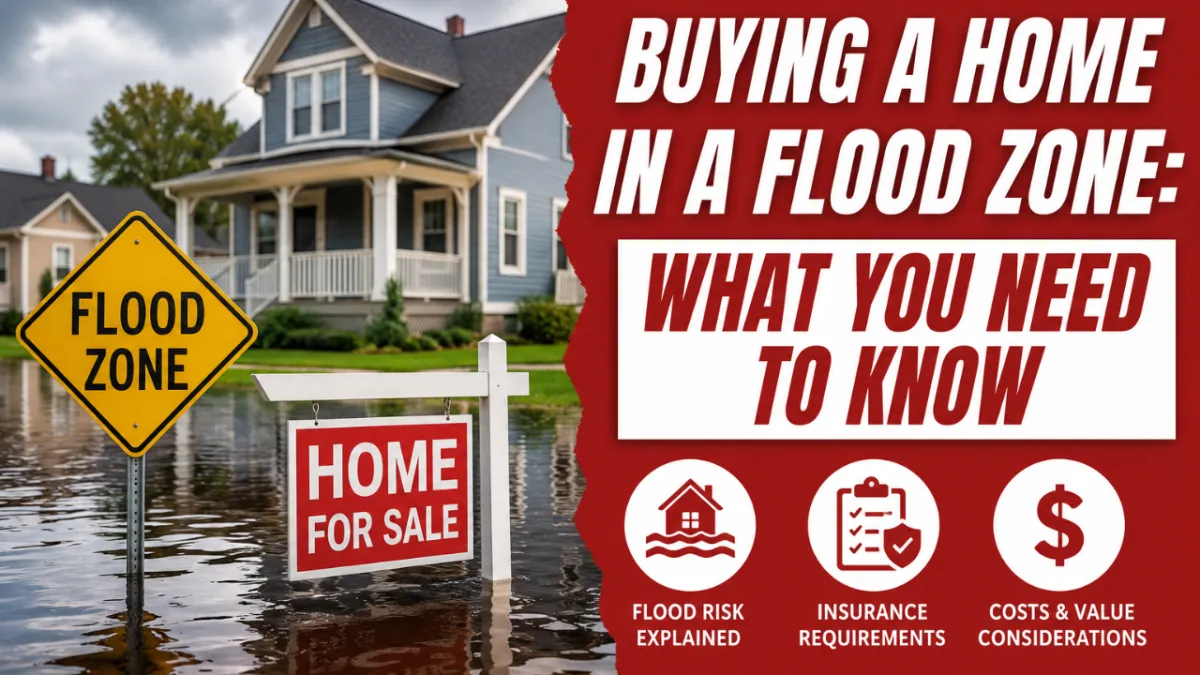
Buying a Home in a Flood Zone: What You Need to Know
Buying a home in a flood zone isn't necessarily a bad decision, but it does require extra research. Before purchasing, you should understand the property's flood risk, determine whether flood insurance is required, review the home's flood history, and factor potential insurance costs into your overall budget. With the right information, you can make a confident and informed decision.
One of the questions buyers occasionally ask is:
"Should I avoid homes in a flood zone?"
The answer isn't always yes.
Many homes located in flood-prone areas have never experienced flooding, while some homes outside designated flood zones have.
The key is understanding the property's specific risk—not making assumptions based on a map alone.
Let's look at what every buyer should know.
What Is a Flood Zone?
A flood zone is an area identified by the Federal Emergency Management Agency (FEMA) based on its estimated flood risk.
These maps help determine:
The likelihood of flooding
Whether flood insurance may be required
Building and development standards
Insurance pricing
Not all flood zones carry the same level of risk.
Some represent lower-risk areas, while others have a greater probability of flooding during certain weather events.
Does a Flood Zone Mean the Home Floods?
No.
Being located in a flood zone does not automatically mean a home has flooded before.
Likewise, homes outside flood zones are not immune to flooding.
Flooding can result from:
Heavy rainfall
Overflowing creeks or rivers
Poor drainage
Tropical storms
Flash floods
That's why it's important to evaluate each property individually.
Will You Need Flood Insurance?
If you're financing the home with a mortgage, your lender may require flood insurance if the property is located in certain FEMA-designated flood zones.
Even if insurance isn't required, some buyers choose to purchase flood coverage for added peace of mind.
Insurance costs vary depending on factors such as:
Flood zone designation
Elevation
Home construction
Coverage amount
Insurance provider
Before making an offer, ask your insurance agent for an estimate so you can include it in your monthly budget.
Questions Every Buyer Should Ask
Before purchasing a home in a flood zone, ask:
Has the property ever flooded?
Is flood insurance currently required?
What is the annual flood insurance premium?
Have any flood mitigation improvements been completed?
Are elevation certificates available?
Has the seller filed previous flood insurance claims?
The more information you gather, the better prepared you'll be.
Check the Property's Drainage
During your showing, pay attention to how water may move around the property.
Look for:
Standing water
Poor grading
Drainage ditches
Retaining walls
Nearby creeks or ponds
Low-lying areas
Good drainage can help reduce water-related concerns.
Flood Insurance Is Only One Part of the Cost
When evaluating affordability, don't focus solely on the purchase price.
Also consider:
Flood insurance premiums
Homeowners insurance
Property taxes
Maintenance
Future mitigation improvements
A home that appears affordable at first may have higher long-term ownership costs if flood insurance is required.
Buying in Augusta and the CSRA
The Augusta area is located near the Savannah River and several creeks, making flood awareness an important part of the home-buying process in some neighborhoods.
Depending on where you're buying—including parts of:
Augusta
Evans
Martinez
Grovetown
North Augusta
some properties may be located near waterways or within designated flood hazard areas.
That doesn't automatically make them poor investments.
It simply means buyers should complete additional due diligence before purchasing.
A local Realtor can help you identify whether a property is located in a flood zone and guide you toward the resources needed to make an informed decision.
Don't Skip the Home Inspection
A home inspection cannot predict future flooding, but it may identify signs of previous moisture issues.
Inspectors often look for:
Water stains
Mold
Wood rot
Foundation moisture
Crawl space concerns
Drainage issues
If moisture-related concerns are discovered, additional evaluation may be recommended.
A Real-Life Example
I recently worked with buyers who found a beautiful home near one of Augusta's waterways.
They were concerned after learning part of the property was located in a designated flood zone.
Instead of walking away immediately, we gathered more information.
They spoke with their insurance provider, reviewed the property's flood history, and learned the home had never experienced flooding. They also received a flood insurance quote that fit comfortably within their budget.
With all the facts in hand, they felt confident moving forward.
The experience reinforced an important lesson: decisions are best made with accurate information—not assumptions.
Frequently Asked Questions
Is buying a home in a flood zone a bad idea?
Not necessarily. Many homes in flood zones are excellent properties. The key is understanding the flood risk, insurance requirements, and the property's history before purchasing.
Will I have to buy flood insurance?
If your lender requires it because the home is in a designated flood zone, then yes. Even if it's not required, some homeowners choose to carry flood insurance for additional protection.
Does every home in a flood zone flood?
No. A flood zone identifies the potential risk of flooding, not whether a home has actually flooded in the past.
Can I find out if a home has flooded before?
Yes. Ask the seller about the property's flood history and consult your Realtor, insurance agent, and other available resources as part of your due diligence.
How can a Realtor help?
A local Realtor can help you identify flood zone designations, explain how they may affect your purchase, recommend local resources, and guide you through the home-buying process with confidence.
Meet Sherry Sanders
For Sherry Sanders, real estate isn't just about property. It's about finding where your family belongs.
As a former educator in both Richmond County and Columbia County, Sherry possesses firsthand knowledge of the local neighborhoods, lifestyles, and school zones that make the CSRA such an incredible place to live.
Backed by over two decades of local sales and leadership experience, she helps buyers look beyond beautiful finishes to evaluate the quality, condition, and long-term value of every home they consider.
A proud grandmother and lifelong local, Sherry is dedicated to making you feel right at home.
Have more questions about buying a home in Augusta or the CSRA?
📞 Call Sherry Sanders at 706-877-7005