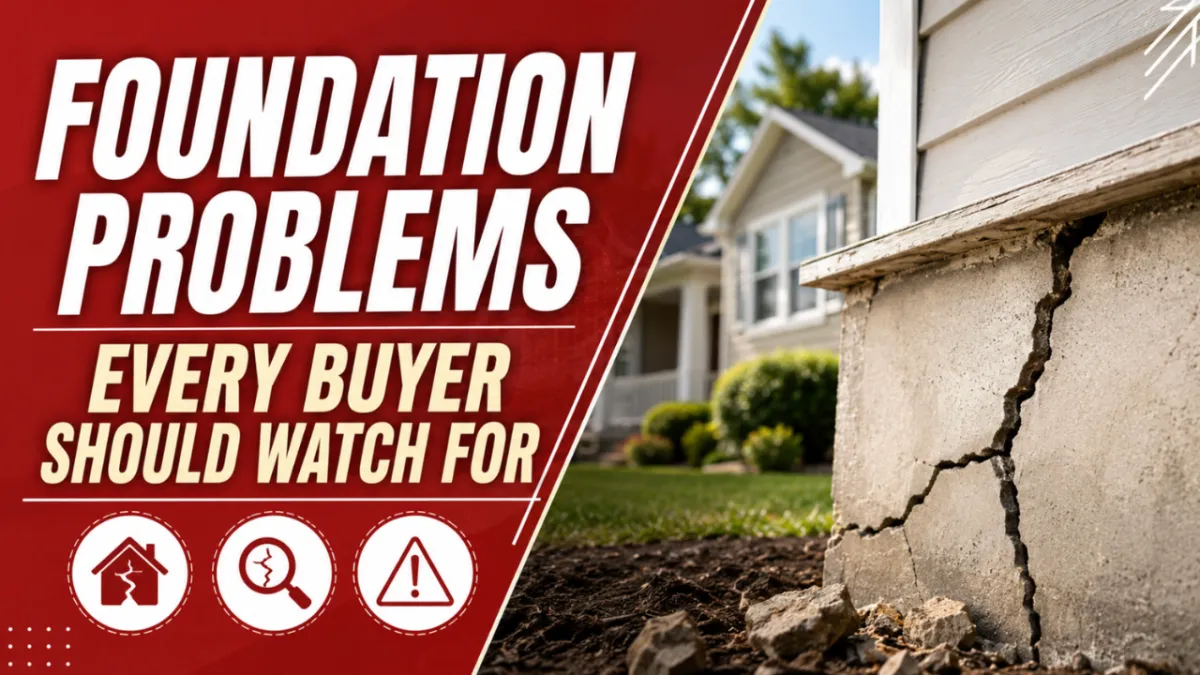
Foundation Problems Every Buyer Should Watch For
Foundation problems are one of the most serious issues buyers can encounter, but not every crack or sign of settling means you should walk away from a home. The key is knowing the difference between normal settling and structural concerns that could require expensive repairs. A professional home inspection—and, when necessary, a structural engineer's evaluation—can help you make an informed decision before you buy.
One of the biggest fears buyers have is purchasing a home with hidden structural problems.
That's understandable.
A foundation supports the entire house, so when something is wrong beneath the home, it can affect everything above it.
The good news?
Many foundation issues are minor, while others can be repaired successfully. The important thing is knowing what to look for during your home search.
What Causes Foundation Problems?
Foundations can shift over time for several reasons, including:
Natural settling
Expansive or shrinking soil
Poor drainage
Water intrusion
Tree roots
Construction defects
Long-term moisture changes
In Georgia, seasonal changes in soil moisture can cause some movement over time, making routine inspections especially important.
Warning Signs to Watch For
While touring a home, keep an eye out for these potential red flags.
Large Foundation Cracks
Small hairline cracks are common in many homes.
However, be cautious if you notice:
Wide cracks
Stair-step cracks in brick
Horizontal cracks
Cracks that appear to be growing
These may indicate movement that deserves further evaluation.
Uneven or Sloping Floors
As you walk through the home, pay attention to how the floors feel.
Notice if:
Floors slope noticeably
Furniture appears uneven
Floors bounce excessively
Some unevenness can occur in older homes, but significant changes should be investigated.
Doors and Windows That Stick
Foundation movement can affect how doors and windows operate.
Watch for:
Doors that won't latch
Windows that are difficult to open
Uneven gaps around doors
Frames that appear twisted
These issues don't always indicate structural damage, but they may be signs of movement.
Cracks Above Doors and Windows
Look at the drywall around openings.
Large diagonal cracks extending from doors or windows may indicate shifting.
Again, context matters.
A home inspector can help determine whether these are cosmetic or structural.
Gaps Around Trim or Exterior Brick
Walk around the outside of the home.
Look for:
Separation between brick and trim
Gaps around windows
Cracked mortar
Visible movement in exterior walls
These signs may suggest settlement or structural movement.
Don't Panic Over Every Crack
One of the biggest misconceptions in real estate is that every crack means foundation failure.
That's simply not true.
Homes naturally settle over time.
Minor cosmetic cracks are common, especially in older homes.
The goal is to determine whether the movement is:
Stable
Cosmetic
Ongoing
Structural
That's why professional inspections are so valuable.
What Happens If the Inspection Finds Foundation Issues?
Finding foundation concerns doesn't automatically mean the deal is over.
Depending on the findings, buyers may:
Request additional evaluation by a structural engineer
Negotiate repairs
Request a seller credit
Renegotiate the purchase price
Continue with the purchase if the issue is minor
Walk away if the repairs are extensive and allowed under the contract
Every situation is unique.
Foundation Problems in Augusta and the CSRA
Homes throughout Augusta, Evans, Grovetown, Martinez, Harlem, and North Augusta vary widely in age, construction style, and soil conditions.
Historic homes in neighborhoods like Summerville and Olde Town may show signs of normal settling simply because of their age.
Newer homes can also experience movement if drainage or grading wasn't properly addressed.
That's why it's important to evaluate the condition of each home individually rather than making assumptions based on age alone.
A local Realtor familiar with the Augusta market can help you understand what is common in different neighborhoods and when additional evaluation may be appropriate.
A Home Inspection Is Your Best Protection
Even experienced buyers can't diagnose foundation problems during a showing.
A professional home inspector will evaluate:
Foundation walls
Crawl spaces
Basement areas (if applicable)
Floor levels
Signs of movement
Moisture concerns
If anything appears questionable, they may recommend a structural engineer for a more detailed evaluation.
That extra step can provide valuable peace of mind before you move forward.
A Real-Life Example
I once worked with buyers who loved a beautiful brick home in Augusta.
During our showing, they noticed a few small cracks near a doorway and immediately worried the house had major foundation problems.
Instead of making assumptions, we moved forward with a professional inspection.
The inspector determined the cracks were the result of normal settling over many years—not structural failure.
The buyers were relieved, and they purchased the home with confidence.
On another transaction, however, an inspection uncovered significant foundation movement that required further engineering review.
Because we had the right professionals involved, my clients were able to make an informed decision before closing.
That's exactly why inspections matter.
Frequently Asked Questions
Are foundation cracks always a bad sign?
No. Small hairline cracks are common in many homes. Larger or expanding cracks should be evaluated by a qualified professional.
Can foundation problems be repaired?
Many foundation issues can be repaired successfully. The repair method depends on the cause and severity of the movement.
Should I avoid buying a home with foundation repairs?
Not necessarily. Some homes have professionally repaired foundations that are performing well. Ask for documentation and discuss the repairs with your inspector.
Is foundation movement common in older homes?
Some settling is normal in older homes, but significant movement should always be investigated before purchasing.
How can a Realtor help?
A local Realtor can identify potential warning signs, recommend trusted inspectors and structural engineers, explain inspection results, and help you negotiate if foundation concerns are discovered.
Meet Sherry Sanders
For Sherry Sanders, real estate isn't just about property. It's about finding where your family belongs.
As a former educator in both Richmond County and Columbia County, Sherry possesses firsthand knowledge of the local neighborhoods, lifestyles, and school zones that make the CSRA such an incredible place to live.
Backed by over two decades of local sales and leadership experience, she helps buyers look beyond beautiful finishes to evaluate the quality, condition, and long-term value of every home they consider.
A proud grandmother and lifelong local, Sherry is dedicated to making you feel right at home.
Have more questions about buying a home in Augusta or the CSRA?
📞 Call Sherry Sanders at 706-877-7005