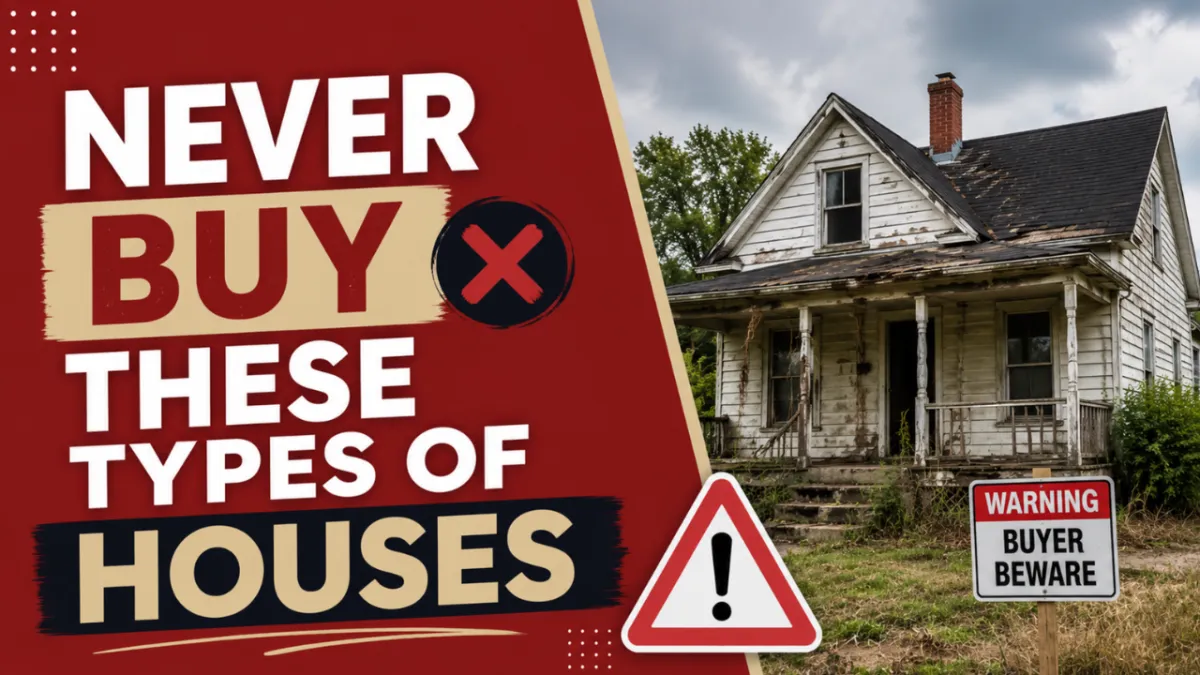
Never Buy These Types of Houses
Not every house is a bad investment, but some properties deserve extra caution. Homes with major structural problems, extensive water damage, poor-quality renovations, or locations that don't fit your long-term needs can become expensive mistakes. Before buying any home, it's important to understand the risks, complete a thorough inspection, and work with professionals who can help you make an informed decision.
One of the biggest fears buyers have is simple:
"What if I buy the wrong house?"
It's a valid concern.
A beautiful kitchen and fresh paint can hide costly problems.
The goal isn't to scare you away from older or unique homes.
It's to help you recognize the warning signs before you make one of the biggest investments of your life.
1. Homes With Major Structural Issues
Cosmetic updates are relatively easy to fix.
Foundation problems are not.
Watch for signs such as:
Large foundation cracks
Uneven floors
Doors or windows that won't close properly
Bowing walls
Significant settling
Structural repairs can be expensive and may affect the home's long-term value.
Always have concerns evaluated by a qualified professional.
2. Homes With Extensive Water Damage
Water is one of a home's biggest enemies.
Look for:
Water stains on ceilings
Mold or mildew
Soft flooring
Musty odors
Signs of previous flooding
Damaged drywall
Water issues can indicate larger problems hidden behind walls or under flooring.
3. Poorly Flipped Homes
Not every renovated home is a bad purchase.
But some quick flips focus more on appearance than quality.
Watch for:
Fresh paint covering obvious damage
Uneven flooring installation
Cheap finishes throughout
Poor tile work
Cabinets that don't align
New cosmetic upgrades with old mechanical systems
Always look beyond the surface.
A thorough home inspection becomes especially important with recently renovated properties.
4. Homes in High Flood Risk Areas
Some properties may require flood insurance or have a history of flooding.
Before purchasing, understand:
Whether the home is in a flood zone
Insurance requirements
Drainage around the property
Previous flood history
Knowing these details can help you avoid unexpected costs later.
5. Homes With Deferred Maintenance
Small maintenance issues can add up quickly.
Be cautious if you notice:
Peeling paint
Damaged siding
Broken gutters
Rotting wood
Old HVAC systems
Roof problems
Deferred maintenance may suggest other repairs have also been postponed.
6. Homes That Stretch Your Budget
One of the worst houses you can buy isn't necessarily the one with the biggest repairs.
It's the one you can't comfortably afford.
Buying at the very top of your budget can leave little room for:
Maintenance
Emergencies
Savings
Travel
Everyday expenses
A home should improve your financial future—not create constant stress.
7. Homes Without a Professional Inspection
Skipping the inspection to make your offer more competitive can be risky.
A home inspection may uncover issues with:
Roofing
Plumbing
Electrical systems
HVAC
Foundation
Moisture intrusion
An inspection gives you valuable information before you commit to the purchase.
8. Homes That Don't Fit Your Lifestyle
Sometimes the "wrong" home isn't about condition.
It's about fit.
Ask yourself:
Is the commute reasonable?
Does the neighborhood fit your lifestyle?
Is there enough space for future needs?
Are you comfortable with the maintenance?
The best home is one that supports your life today and in the years ahead.
Buying in Augusta and the CSRA
Whether you're looking in:
Augusta
Evans
Grovetown
Martinez
Harlem
North Augusta
every neighborhood has its own advantages and considerations.
Some areas feature historic homes with incredible character but potentially higher maintenance needs.
Others offer newer construction with modern features.
If you're considering an older home in established neighborhoods like Summerville, be sure to pay close attention to the condition of major systems such as the roof, plumbing, electrical, and foundation.
If you're buying near waterways or low-lying areas, it's also wise to understand flood risks and insurance requirements before making an offer.
Local knowledge can help you identify opportunities while avoiding costly surprises.
A Real-Life Example
I once worked with buyers who fell in love with a beautifully renovated home.
Everything looked brand new.
During the inspection, however, we discovered significant moisture issues hidden beneath the flooring and evidence of previous water intrusion.
Instead of rushing forward, we used the inspection results to evaluate their options.
Ultimately, they chose another home that required fewer long-term repairs and better fit their budget.
The inspection likely saved them thousands of dollars—and a lot of future stress.
Frequently Asked Questions
Should I avoid buying an older home?
Not necessarily. Many older homes are well built and beautifully maintained. The key is understanding their condition through a professional inspection.
Are flipped homes bad investments?
Not always. Some renovations are completed to a high standard, while others prioritize appearance over quality. Always inspect the workmanship and major systems carefully.
Is buying in a flood zone a bad idea?
Not automatically. However, buyers should understand flood insurance requirements, past flooding history, and any additional costs before purchasing.
What's the biggest mistake buyers make?
Focusing on cosmetic features while overlooking structural, mechanical, or location-related issues.
How can a Realtor help me avoid buying the wrong house?
A local Realtor can help identify potential concerns, recommend trusted inspectors, explain neighborhood differences, and guide you toward a home that fits your long-term goals.
Meet Sherry Sanders
For Sherry Sanders, real estate isn't just about property. It's about finding where your family belongs.
As a former educator in both Richmond County and Columbia County, Sherry possesses firsthand knowledge of the local neighborhoods, lifestyles, and school zones that make the CSRA such an incredible place to live.
Backed by over two decades of local sales and leadership experience, she provides steady, expert guidance for buyers navigating the home buying process.
A proud grandmother and lifelong local, Sherry is dedicated to making you feel right at home.
Have more questions about buying a home?
📞 Call Sherry Sanders at 706-877-7005