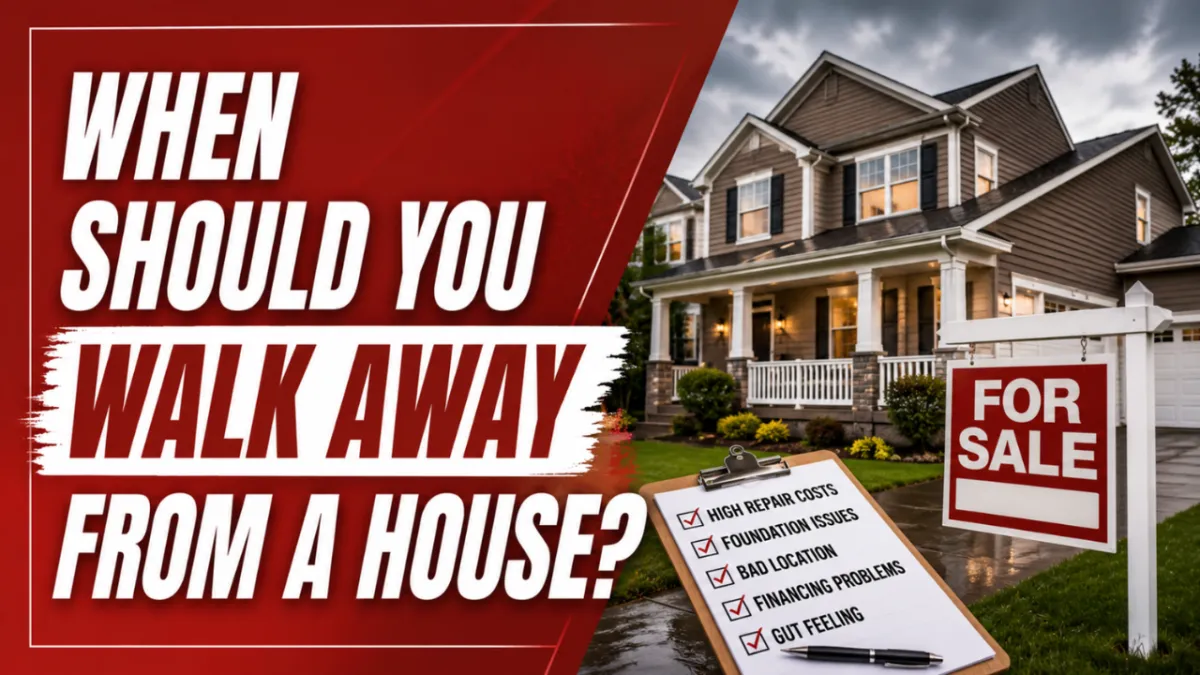
When Should You Walk Away From a House?
Walking away from a house is sometimes the smartest financial decision you can make. If a home has serious structural problems, extensive water damage, major inspection issues, an unrealistic seller, or simply doesn't fit your budget or long-term goals, it's often better to keep looking. While it's easy to become emotionally attached to a home, making a decision based on facts rather than feelings can save you thousands of dollars and years of regret.
Buying a home is exciting.
After weeks—or even months—of searching, it's easy to imagine your future in a property you love.
But sometimes, the smartest move isn't moving forward.
It's walking away.
That doesn't mean you've failed.
It means you're protecting one of the biggest financial investments you'll ever make.
Here are some situations where walking away may be the right decision.
1. The Home Has Serious Structural Problems
Not every crack in a wall is a deal breaker.
However, major structural issues deserve careful attention.
Examples include:
Significant foundation movement
Large structural cracks
Sagging floors
Bowing walls
Structural roof damage
Some problems can be repaired.
Others may require extensive work that's beyond your budget or comfort level.
2. The Inspection Reveals Major Issues
A home inspection is designed to uncover problems you may not see during a showing.
If the report identifies several major concerns, such as:
Roof replacement
Extensive plumbing repairs
Electrical hazards
Severe water intrusion
Mold
HVAC replacement
Structural damage
it's time to evaluate whether the investment still makes sense.
3. The Seller Won't Negotiate
Sometimes the issue isn't the home.
It's the transaction.
If significant problems are discovered and the seller refuses to:
Make repairs
Offer credits
Renegotiate fairly
you may decide the risks outweigh the reward.
Every transaction requires compromise.
4. The House Stretches Your Budget
One of the biggest mistakes buyers make is purchasing a home they technically qualify for—but can't comfortably afford.
If buying the home means sacrificing:
Emergency savings
Retirement contributions
Vacations
Everyday financial security
it may be better to keep looking.
Your dream home shouldn't make you financially stressed every month.
5. The Neighborhood Doesn't Feel Right
The house may be beautiful.
But the location matters just as much.
Ask yourself:
Is the commute manageable?
Do you feel comfortable in the neighborhood?
Are nearby amenities important to you?
Does the community fit your lifestyle?
You can renovate a home.
You can't move the neighborhood.
6. There Are Signs of Poor Renovations
Fresh paint and new countertops don't guarantee quality.
If you notice:
Sloppy workmanship
Uneven flooring
Crooked tile
DIY electrical work
Cosmetic updates hiding larger issues
proceed with caution.
A professional inspection becomes even more important.
7. You Feel Pressured to Buy
Buying a home is a major decision.
Never let pressure cause you to ignore warning signs.
Whether it's:
A competitive market
Multiple offers
Fear of missing out (FOMO)
it's okay to slow down and make sure you're making the right choice.
Another home will come along.
8. The Numbers Don't Make Sense
Even if you love the house, ask yourself:
Can you comfortably afford the monthly payment?
Have you budgeted for maintenance?
Are property taxes reasonable?
What about insurance costs?
Will you still have savings after closing?
Buying a home should strengthen your financial future—not create unnecessary stress.
9. Your Gut Says Something Is Wrong
While every decision should be based on facts, don't ignore your instincts.
If something doesn't feel right:
Ask more questions.
Schedule additional inspections.
Slow the process down.
Gather more information.
You deserve to feel confident before signing one of the biggest contracts of your life.
Buying in Augusta and the CSRA
Whether you're buying in:
Augusta
Evans
Grovetown
Martinez
Harlem
North Augusta
every home—and every neighborhood—is different.
Some buyers fall in love with historic homes in Summerville, while others prefer newer construction near Fort Gordon or growing communities in Columbia County.
The key isn't finding a perfect home.
It's finding the right home for your budget, lifestyle, and long-term goals.
A local Realtor can help you separate minor concerns from true deal breakers so you can make a confident decision.
Walking Away Can Be a Smart Financial Decision
Many buyers worry they'll regret walking away.
In reality, the opposite is often true.
Walking away from a home with significant problems may save you:
Thousands in unexpected repairs
Months of stress
Difficult negotiations
Financial strain
Future regret
Buying the right home is always better than buying the first home.
A Real-Life Example
I once worked with buyers who absolutely loved a home the moment we pulled into the driveway.
It checked nearly every box on their wish list.
After the inspection, however, we discovered significant foundation movement, an aging roof that needed replacement, and evidence of previous water intrusion.
We requested repairs, but the seller wasn't willing to negotiate.
It wasn't an easy decision, but my buyers chose to walk away.
A few weeks later, they found another home they loved just as much—with far fewer concerns.
Today, they're grateful they didn't let emotions outweigh the facts.
Frequently Asked Questions
When should I walk away from buying a house?
Consider walking away if the home has major structural issues, extensive inspection concerns, serious financial implications, or if the seller refuses to negotiate reasonably.
Should I walk away after a bad inspection?
Not always. Many inspection issues can be negotiated or repaired. The decision depends on the severity of the problems and your comfort level.
Is it okay to back out if I have concerns?
Yes. If your contract includes the appropriate contingencies, walking away may be the best decision if significant issues are discovered.
What if I love the house?
It's natural to become emotionally attached, but try to make your decision based on facts, long-term affordability, and professional advice.
How can a Realtor help?
A local Realtor can help you evaluate inspection findings, negotiate repairs, explain your options, and guide you toward a home that's a better fit if walking away becomes the best decision.
Meet Sherry Sanders
For Sherry Sanders, real estate isn't just about property. It's about finding where your family belongs.
As a former educator in both Richmond County and Columbia County, Sherry possesses firsthand knowledge of the local neighborhoods, lifestyles, and school zones that make the CSRA such an incredible place to live.
Backed by over two decades of local sales and leadership experience, she helps buyers make confident, informed decisions by providing honest guidance every step of the home-buying journey—even if that means walking away from a home that isn't the right fit.
A proud grandmother and lifelong local, Sherry is dedicated to making you feel right at home.
Have more questions about buying a home in Augusta or the CSRA?
📞 Call Sherry Sanders at 706-877-7005
🌐 https://sherrysandersrealtor.com/